Levan II Dadiani and the Kelasuri Wall
Sixty kilometres of towers from the mouth of the Kelasuri to the Enguri, and an argument about who built them.
1640
Levan II Dadiani (1597-1657) ruled Mingrelia in the decades when the united Georgian kingdom was gone and neighbours raided one another. He is himself remembered for raids and for hostages taken to be ransomed. His name is attached to the system of fortifications along the left bank of the Kelasuri, built to stop the raids of Abkhaz feudal lords; the whole line runs about sixty kilometres.
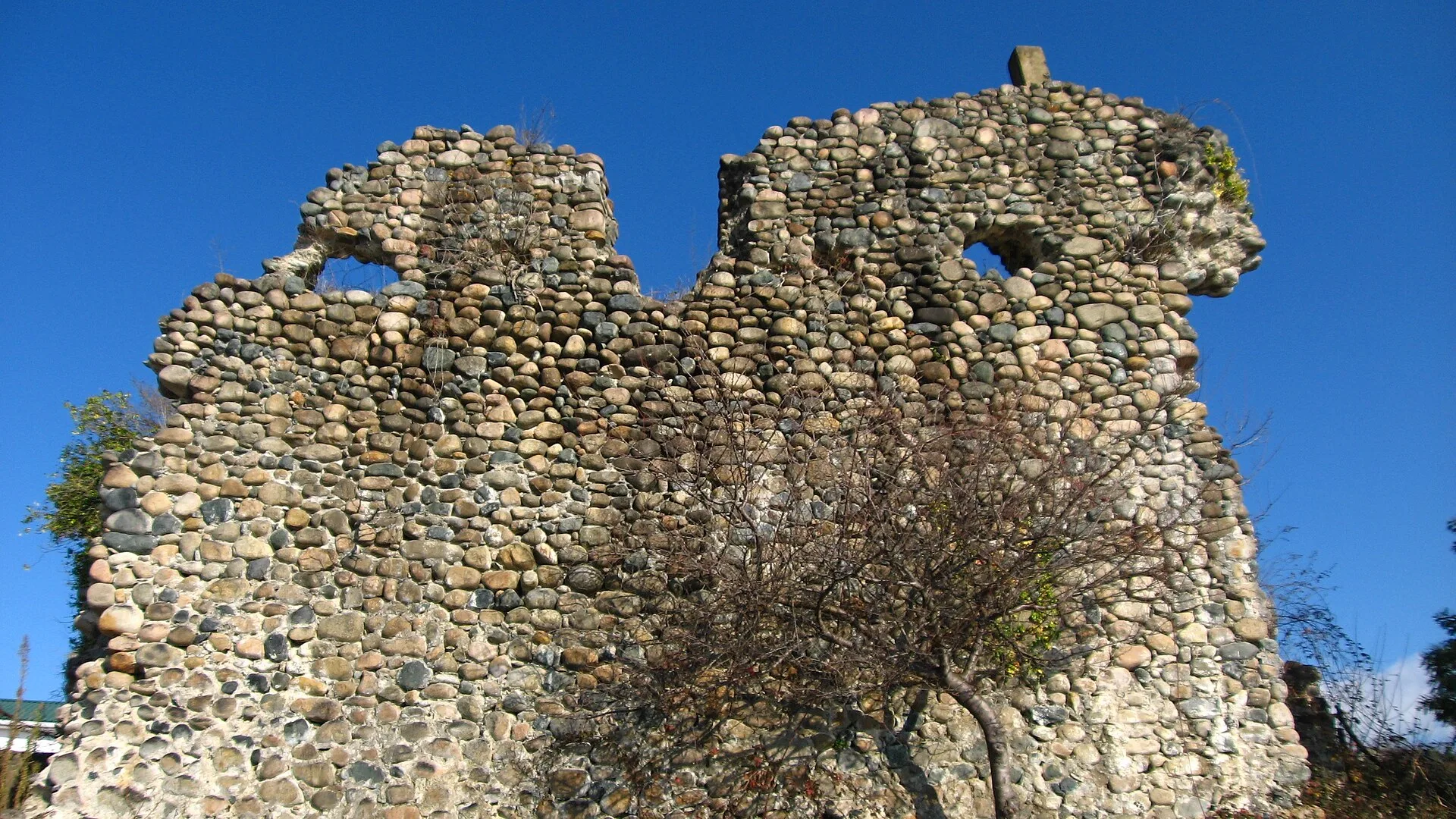
There never was a continuous wall: the builders leaned on cliffs and gorges and closed off the passages between them. Two hundred and seventy-nine towers have been counted, about a hundred still stand. They are rectangular, seven by eight or eight by nine metres, four to six metres high, forty to a hundred and twenty metres apart, and where there is no wall the gaps reach a kilometre. The line begins at the mouth of the Kelasuri east of Sokhumi, crosses the Kodori near Tsebelda, passes Tkvarcheli and ends near the village of Lekukhona on the right bank of the Enguri.
Who built it, and when, is still argued. The Georgian chronicles know a Great Abkhazian Wall as early as Juansher, in connection with eighth-century events, but nothing of that wall survives. Some scholars date the standing fortifications to the sixth century, others credit Levan II and the seventeenth. The wall now lies in Abkhazia, where access is closed, and no field work has been done there for a long time.