Kakheti
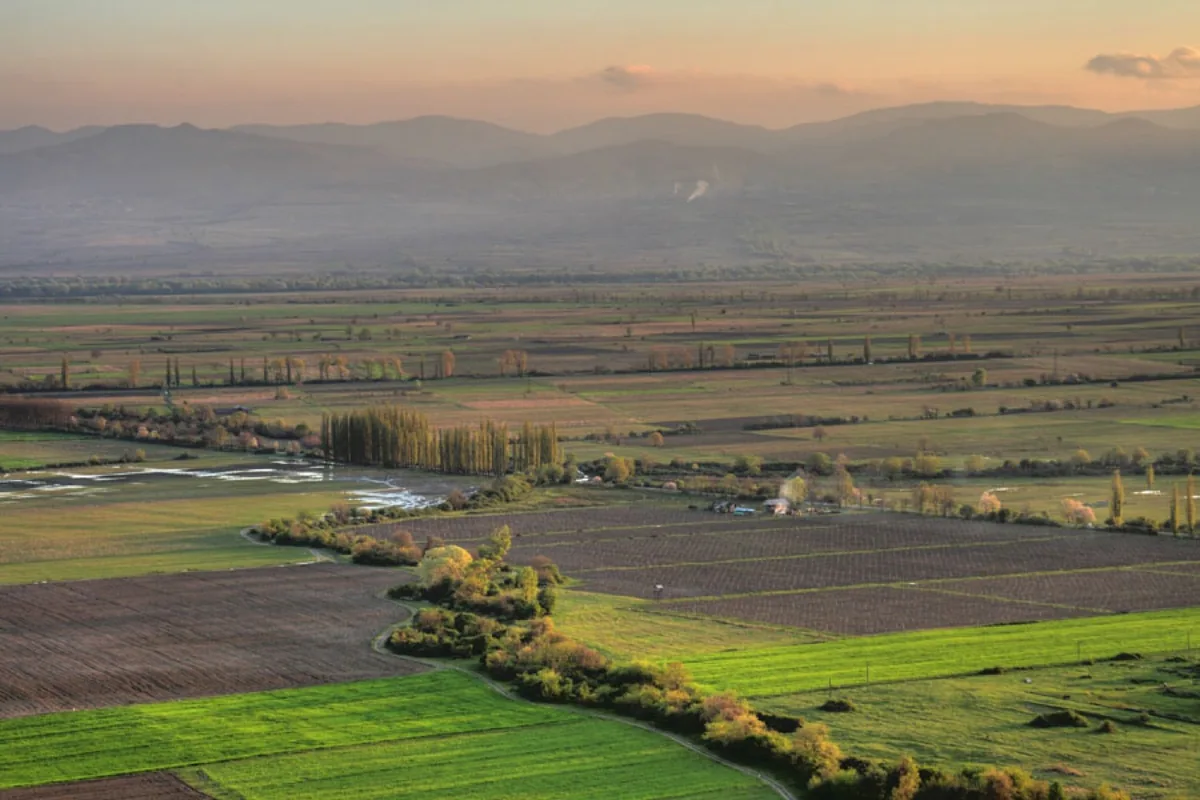
The eastern wine land; the Alazani valley, Telavi, Sighnaghi and Alaverdi make up the heart of Georgian winemaking.
Kakheti occupies the country's eastern edge, from the forested Caucasus foothills in the north to dry steppe in the south-east, but its identity is defined by the fertile Alazani valley between the Caucasus and Gombori ranges; its administrative centre is Telavi.
Winemaking began here roughly 8,000 years ago, the earliest reliably dated tradition of cultivated viticulture in the world, and today Kakheti holds about 65% of Georgia's vineyards, including the indigenous Saperavi and Rkatsiteli grapes.
After unified Georgia broke apart in the 15th century, a separate Kingdom of Kakheti emerged, with its capital first at Gremi and then, after Shah Abbas I's Persian invasion devastated Gremi in 1615, at Telavi, where in the 18th century King Erekle II united Kartli and Kakheti into a single kingdom.
Sources do not single out a separate Kakhetian costume, since the ethnographer Prince Vakhushti Bagrationi wrote that the people of Kakheti and Kartli dressed alike, so the tradition is usually described as the shared Kartli-Kakhetian costume.
The Kartli-Kakhetian chokha worn by men was longer than the Khevsur one, with a triangular chest opening revealing the undershirt, usually worn without a belt, with a slit skirt and small chest pockets for cartridges; women wore long dresses with a fitted bodice.
What to see
- Ikalto Monastery and AcademyThe monastery was founded in the 6th century by Zenon of Ikalto, another of the thirteen Assyrian fathers. Early in the 12th century Arsen of Ikalto, a scholar returned from Greece, and King David the Builder set up an academy here: theology and philosophy, rhetoric and astronomy were taught, but so were viticulture, pottery and smithing. Tradition holds that Shota Rustaveli studied at Ikalto. Shah Abbas burned the academy early in the 17th century; its walls still stand beside the church.
- Batonis Tsikhe, the Palace of King Erekle II in TelaviThe residence of the kings of Kakheti and later of Kartli-Kakheti in the centre of Telavi: a palace, two churches, a bathhouse and walls with towers, all inside one courtyard. Erekle II was born here in 1720 and died here in 1798; from here he ruled the united kingdom of Kartli-Kakheti and signed the Treaty of Georgievsk. Today the complex holds a museum of local history with a picture gallery, and beside the fortress grows a plane tree said locally to be more than nine hundred years old.
- Alaverdi MonasteryThe monastery began in the 6th century with a small church of St George raised by Joseph of Alaverdi, one of the thirteen Assyrian fathers. In the first quarter of the 11th century the Kakhetian king Kvirike built the cathedral on this spot, about fifty metres high: until the Sameba cathedral was built in Tbilisi it remained the tallest church in Georgia, and the space inside rises more than forty metres. The monastery keeps a marani where wine has been made since 1011.
- GremiThe capital of the Kakhetian kingdom from the 15th century and a busy node of the Silk Road: caravans passed through Gremi, Armenian, Persian and Jewish merchants lived in the town, and there were workshops and a mint. Of the royal citadel on the hill there remain the church of the Archangels Michael and Gabriel, built by King Levan in 1565 and painted in 1577, a bell tower, a three-storey palace and a marani. In 1615 the army of Shah Abbas levelled the town, and the capital moved to Telavi.
- The Sighnaghi town wallsThe city wall went up under Erekle II in 1762, when the king gathered the people of the surrounding villages here for shelter from Lezgin raids. It follows the shape of the hill for more than four kilometres, closing the town in a ring, and carries over twenty round watchtowers and six gates; it is one of the few surviving town walls in Georgia. Inside them, Sighnaghi with its pastel facades and cobbles has been nicknamed the city of love: the marriage hall here works round the clock.