Guria
A small western region by the sea: tea, citrus, the light red wine Chkhaveri.
Guria is the smallest of Western Georgia's regions, wedged between Adjara, Imereti, Samegrelo and the Black Sea; its administrative centre is Ozurgeti. From the 16th century until 1829 it was the semi-independent Principality of Guria, ruled by the Gurieli dynasty, before being absorbed into the Russian Empire.
In February–March 1905, Gurian peasants formed one of the Russian Empire's first «peasant republics» (with elected committees and its own courts), known as the Gurian Republic, which survived until tsarist troops suppressed it in early 1906.
The region is known for Gurian polyphonic singing with its distinctive high falsetto krimanchuli, the ancient ball game lelo burti, and tea cultivation; Georgia's first tea plantations were laid out in Guria in the 19th century.
Sources do not single out a costume unique to Guria alone: the men's «chakura» outfit (a short, waist-length chokha, wide trousers and a colourful silk belt) was shared across Guria, Adjara, Samegrelo and south-western Georgia generally.
Gurian and Adjaran costumes used lighter fabrics and brighter colours than those of eastern Georgia, along with rich silver-thread embroidery.
What to see
- NabeghlaviA village in Chokhatauri municipality known for its mineral spring, whose water has been bottled and sold across Georgia since the late 19th century.
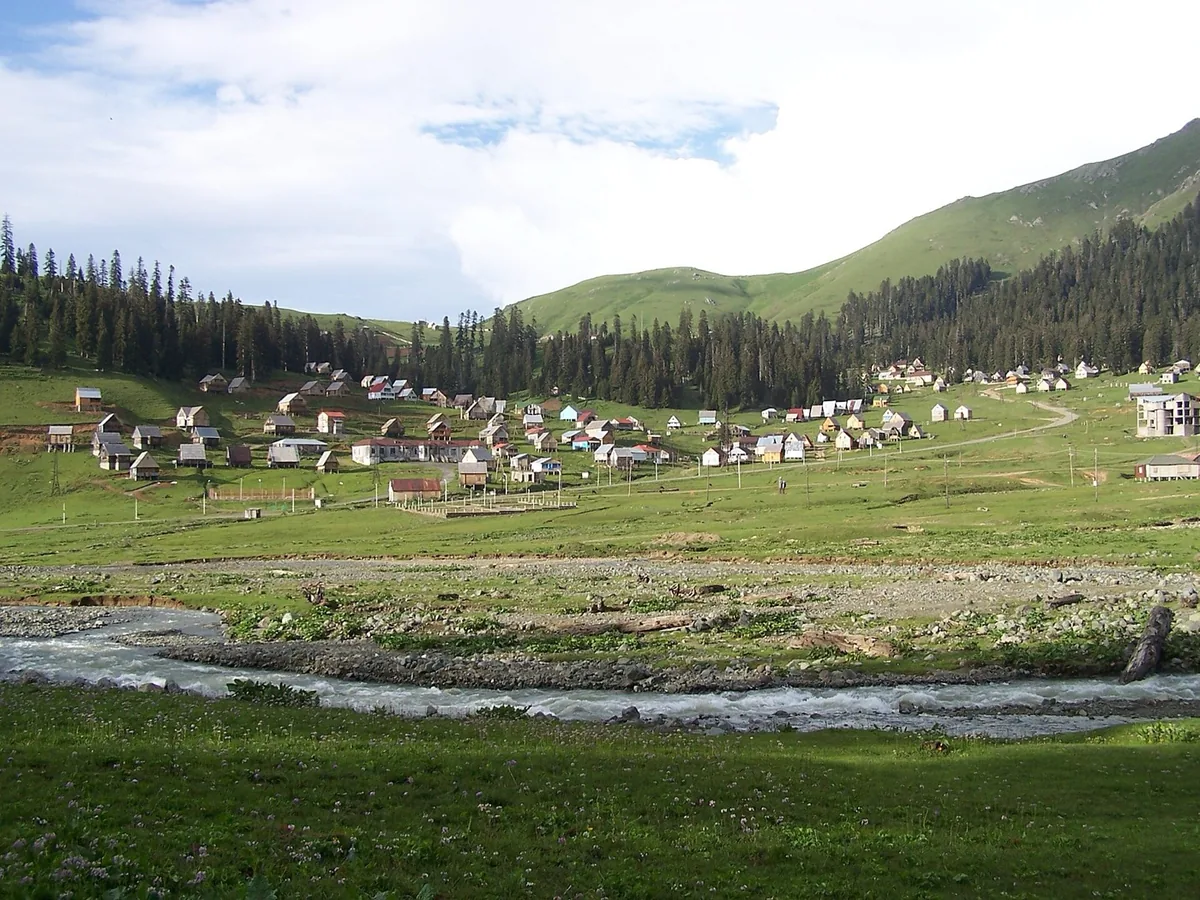
- BakhmaroA mountain climatic resort at roughly 2,000 m in Chokhatauri municipality; its annual Feast of the Transfiguration horse races draw visitors from across Georgia.
- The plane tree garden in OzurgetiA historic park in central Ozurgeti with giant plane trees, part of the historic townscape of Guria's capital.
- UrekiA Black Sea resort known for its unique black magnetic sand, to which healing properties are popularly attributed.