Abkhazia
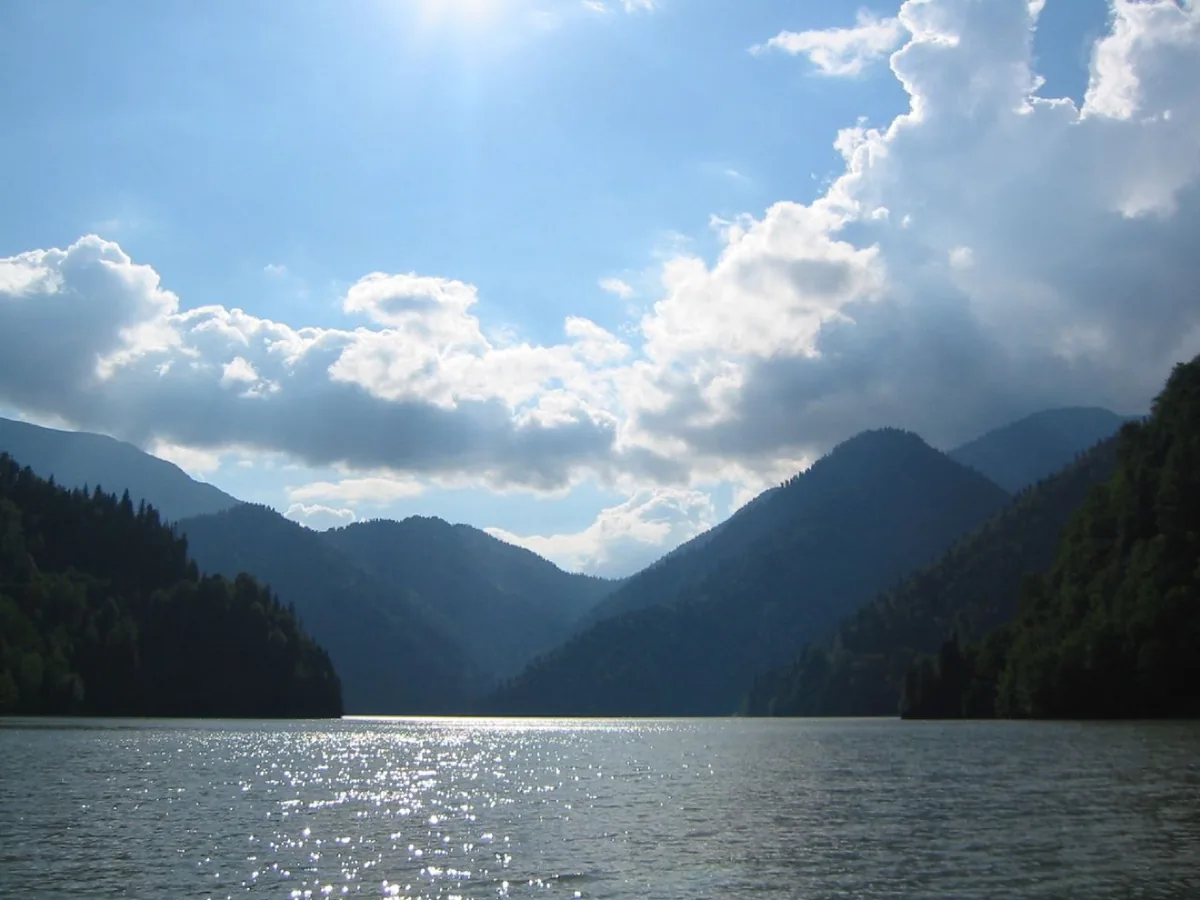
An autonomous republic in the north-west with a subtropical Black Sea coast. Currently outside Tbilisi's effective control.
Abkhazia occupies the country's north-west: a narrow strip of subtropical Black Sea coast rising into the foothills and glaciers of the Greater Caucasus; its capital is Sukhumi. The Abkhaz (Apsua) speak Abkhaz, a language of the Northwest Caucasian family unrelated to Georgian.
During the Soviet period it existed as the Abkhaz ASSR within the Georgian SSR. Georgia, the United Nations and the overwhelming majority of the world's states (189 of the UN's 193 member states) regard Abkhazia as an inseparable part of Georgia's sovereign territory, occupied by Russia: first after the 1992–1993 war and then as a result of Russia's August 2008 invasion. The self-proclaimed authorities in Sukhumi, in power since 1999, are recognised as independent by only four UN member states: Russia, Nicaragua, Venezuela and Syria. Nauru, which recognised Abkhazia in 2009, withdrew its recognition in July 2026.
The region is known for its subtropical landscape (humid Colchic forests and tea and mandarin plantations), as well as Lake Ritsa and one of the world's largest karst cave systems at New Athos.
Like other Caucasus peoples, Abkhaz men's dress was built around the chokha (cherkeska), a fitted black coat with gazyri cartridge pockets sewn across the chest, worn over a shirt, with a beshmet underneath, a felt burka cape for horsemen and a bashlyk hood.
Women's costume consisted of a dress with an open under- or over-coat, underskirts and a belt, often decorated with silver, a tradition shared with the other Abkhaz-Adyghe peoples of the North-West Caucasus.
What to see
- The Sukhumi waterfrontThe seafront boulevard of Abkhazia's capital, lined with pre-war sanatoria, a botanical garden and piers on the Black Sea.
- New Athos MonasteryA monastery founded in 1875 by monks from Mount Athos with the support of Emperor Alexander III; six neo-Byzantine churches on Mount Athos above the town of New Athos.
- New Athos CaveOne of the world's largest karst caves, discovered in 1961; its chain of chambers with an underground lake is reached by an internal cave railway.
- Pitsunda CathedralA 10th-century cathedral dedicated to St Andrew the First-Called, standing in a relict pine grove on Cape Pitsunda; today used as a concert hall with an organ.
- Lake RitsaA high-altitude lake (950 m) ringed by peaks up to 3,500 m, Abkhazia's best-known natural landmark, part of the Ritsa Relict National Park.