Vardzia
The cave monastery of Queen Tamar
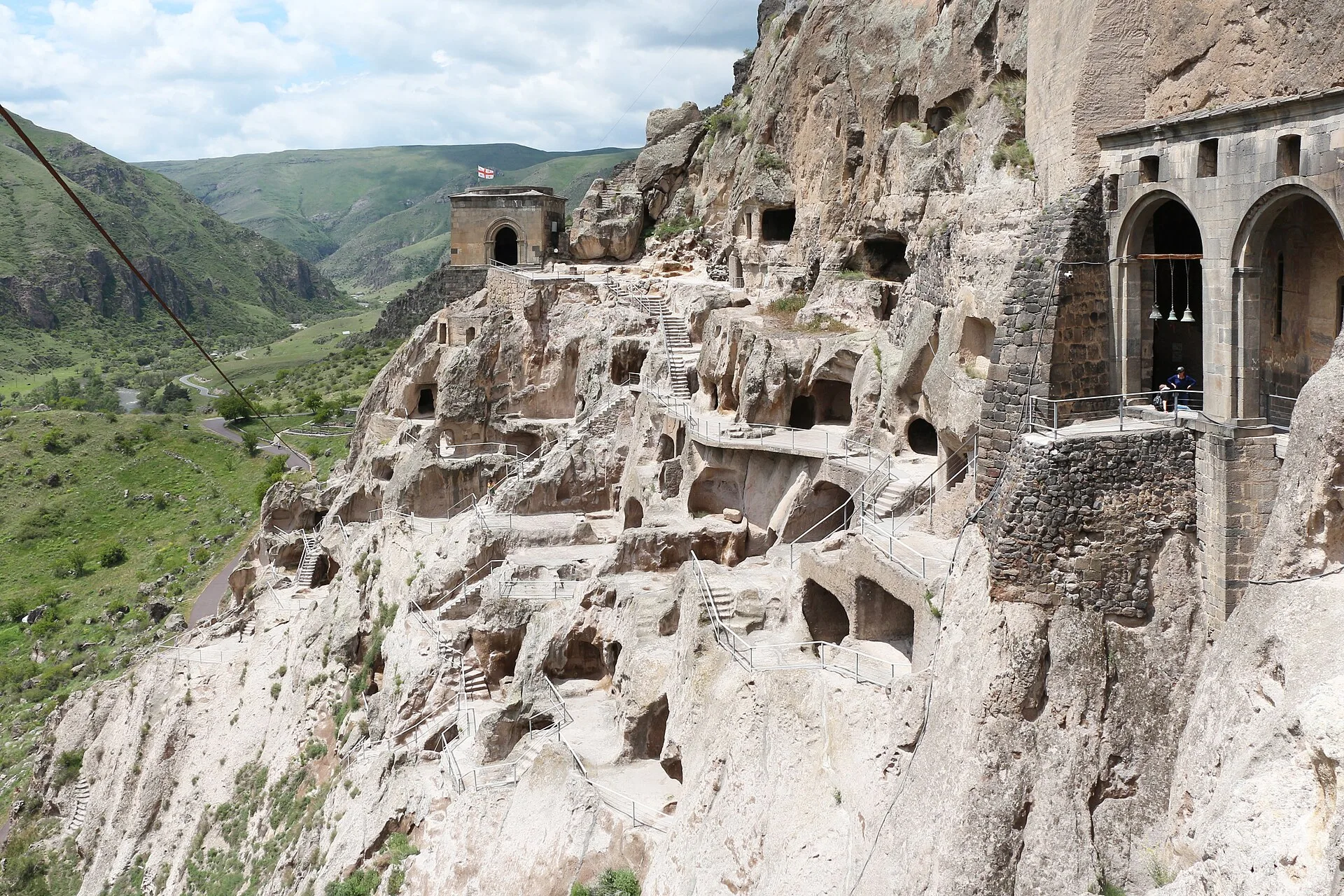
The cave monastery is cut into a sheer cliff above the Mtkvari in the Aspindza municipality of southern Georgia. King George III began the work and his daughter Queen Tamar completed it: the main church of the Dormition was painted in 1184–1186, and its fresco preserves their portraits — one of the few images of Tamar made in her lifetime.
Vardzia was conceived as a fortress on the kingdom's southern border: by various accounts up to thirteen tiers and as many as six thousand rooms — churches, cells, refectories, storerooms, wine cellars, a water supply and hidden passages inside the rock. The earthquake of 1283 brought down the outer layer of the cliff and exposed caves that had been hidden from outside.
In 1551 the Persian shah Tahmasp I sacked the monastery, later the region passed to the Ottomans, and Vardzia stood empty for a long time. Today part of the caves houses a working monastery and the rest is a museum reserve; the site is on Georgia's UNESCO tentative list.