The Dmanisi archaeological site
The site sits on a promontory at the confluence of the Mashavera and Phinezauri rivers, about 85 km southwest of Tbilisi. Its Palaeolithic layers lie beneath the ruins of a medieval town and fortress; systematic excavation began in the 1980s, with stone tools found as early as 1984. It is on Georgia's UNESCO tentative list.
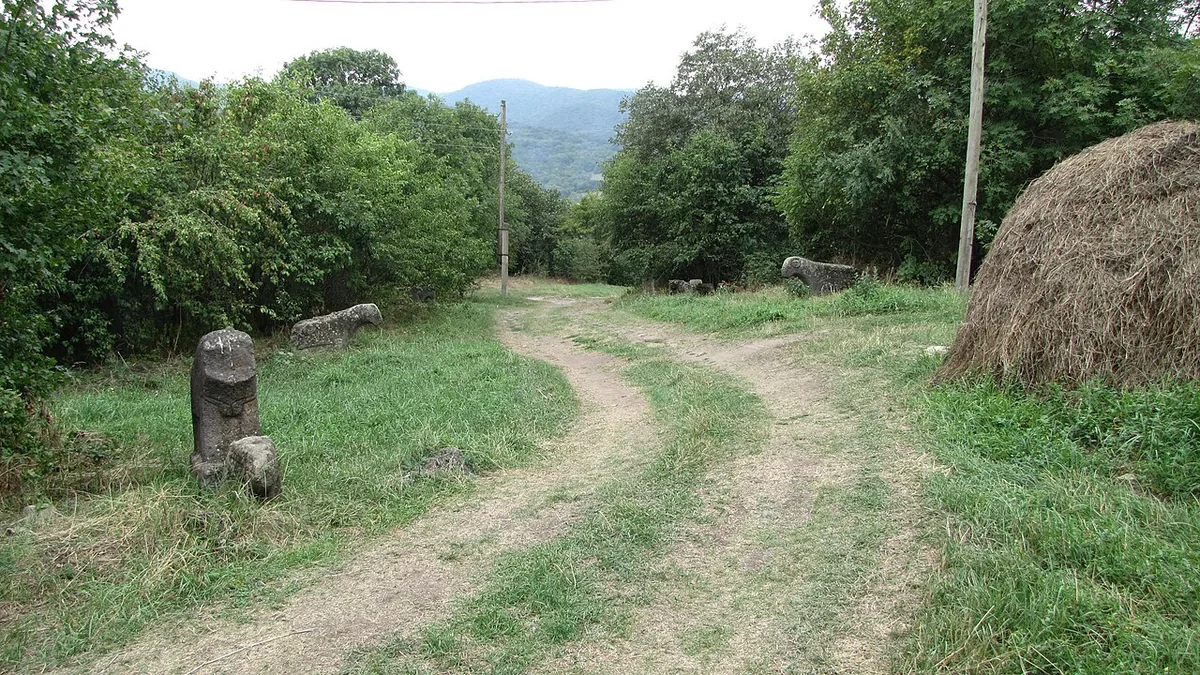
Dmanisi is a multi-layered site in southern Georgia, in Kvemo Kartli, on a promontory at the confluence of the Mashavera and Phinezauri rivers. Its world fame rests on the fact that beneath the medieval ruins lie the earliest remains of the genus Homo outside Africa — about 1.8 million years old.
Above the Palaeolithic layers stands medieval Dmanisi — once a major Georgian town on the trade routes, with a fortress, a bishop's see and a Sioni church. The town declined after the Mongol invasions and the sack by Timur.
Stone tools were found here as early as 1984, and from the late 1980s to the early 1990s the excavations yielded hominin skulls and bones. The work is led by the Georgian National Museum under David Lordkipanidze.
Today Dmanisi is an archaeological reserve and open-air museum; the site is on UNESCO's tentative World Heritage list.