Adjara
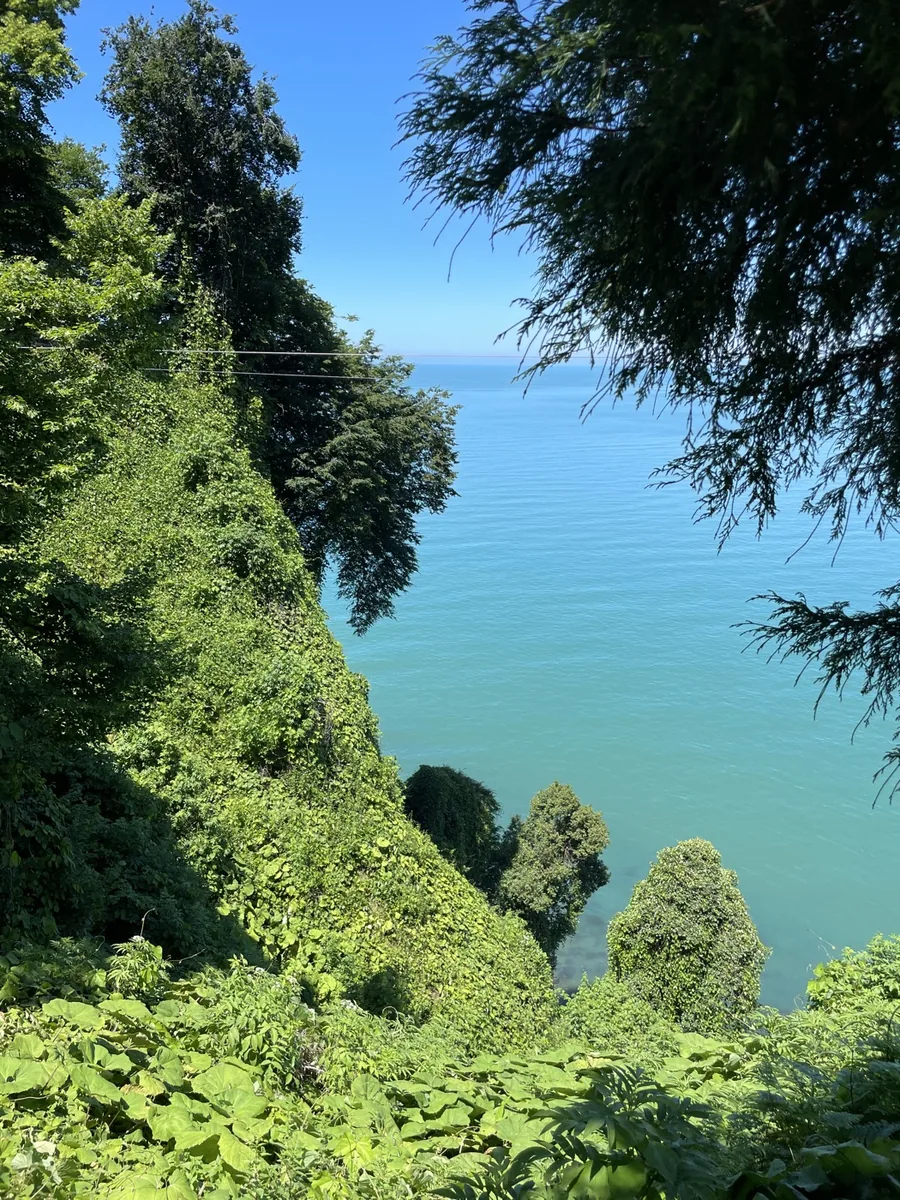
An autonomous republic in the south-west; subtropics, the resort city of Batumi, the boat-shaped Adjaruli khachapuri.
Adjara occupies the country's subtropical south-west on the border with Turkey, from the beaches and skyscrapers of Batumi to the mountain passes of Khulo and Goderdzi. Its capital and largest city, Batumi, is Georgia's second-largest city and its main Black Sea resort.
The Adjarians are an ethnographic group of Georgians, some of whom adopted Islam during the centuries of Ottoman rule; today Orthodox and Muslim communities live side by side in the region, and both faiths' shrines survive in the mountain villages of Upper Adjara.
The humid subtropical coast contrasts with the mountainous interior: Mtirala National Park is one of the rainiest places in the Caucasus, while highland villages still live by herding and orcharding much as they did centuries ago.
Adjaran dress is one of the most recognisable in Georgia, shaped by mountain life. The men's ensemble was a shirt (perangi), trousers (dzigva) of black satin narrowing towards the ankle, a winter quilted zubuni or a summer black-satin vest (elegi), and over it the chokha (chakura), with sleeves to the elbow and a broad patterned belt.
Women's dress included a long blue or red perangi shirt, ruby-coloured cotton sharvali trousers narrowing at the ankle, an orange zubun paragi worn over it, and a woollen apron (peshtemali). The head was covered with a lechaki scarf, over which a second scarf hid part of the face.
Essential elements of the men's costume were a dagger, a kabalakhi (thin wool hood) and knitted woollen socks with soft leather pachula shoes, gear suited to the mountains and field work.
What to see
- Mtirala National ParkOne of the rainiest corners of the Caucasus: Colchic rainforest, waterfalls and trekking trails near the coast.
- Batumi Botanical GardenFounded in 1912 by Russian botanist Andrei Krasnov at Green Cape; one of the largest botanical gardens of the former USSR, with about 5,000 plant species from around the world.
- Batumi PiazzaAn architectural ensemble in the style of an Italian square, a symbol of the modern face of Adjara's resort capital.
- Makhuntseti Bridge and WaterfallA medieval stone arch bridge over the Adjaristsqali river next to a 36 m waterfall, a popular spot in mountainous Adjara.
- Gonio Fortress (Apsaros)A 1st–2nd-century Roman fortress on the site of the port city of Apsaros; tradition holds that the Apostle Matthias is buried here.