Giorgi Saakadze
The Great Mouravi, commander and contested figure
c. 1570–1629
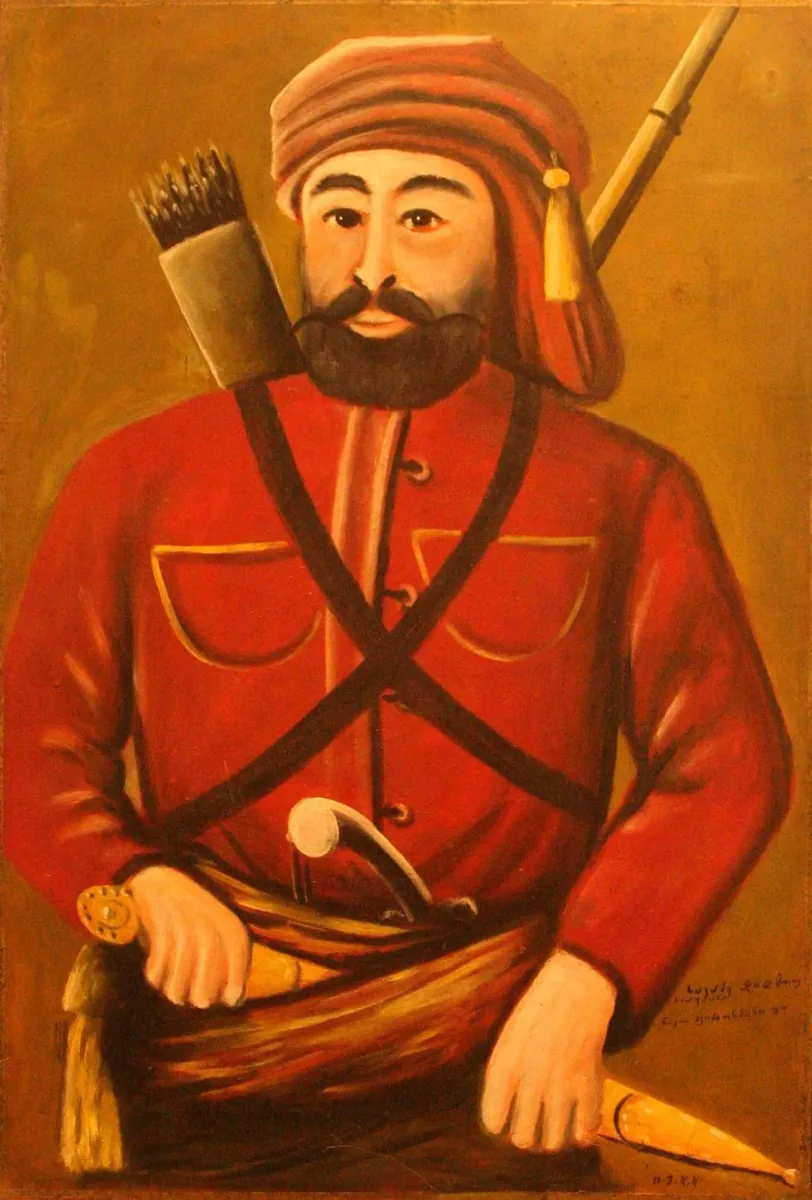
Saakadze rose from the lesser nobility and in 1608 was given the office of mouravi, administrator of Tbilisi and the lands around it; hence his byname, the Great Mouravi. His fame came with a victory over an Ottoman force at Tashiskari in 1609.
In 1612 his rivals convinced King Luarsab II that the mouravi favoured the Persians, and a plot was laid against his life. Saakadze fled to Iran, converted to Islam and won the trust of Shah Abbas I, then took part in Persian campaigns, including against his own country. This is what makes him a contested figure.
In 1625 he turned his arms against the Persians and beat their army at Martqopi; in revenge the shah executed his son Paata. In the same year the Georgians lost the great battle of Marabda, and in 1626 Saakadze was defeated by Teimuraz I at Bazaleti in a war between Georgians. He left for the Ottoman Empire and was executed in Constantinople on 3 October 1629. Georgian memory keeps him both as a commander of rare gift and as a man whose choices historians still argue over.