Valiko Jugheli
Commander of the People's Guard, author of Heavy Cross
1887–1924
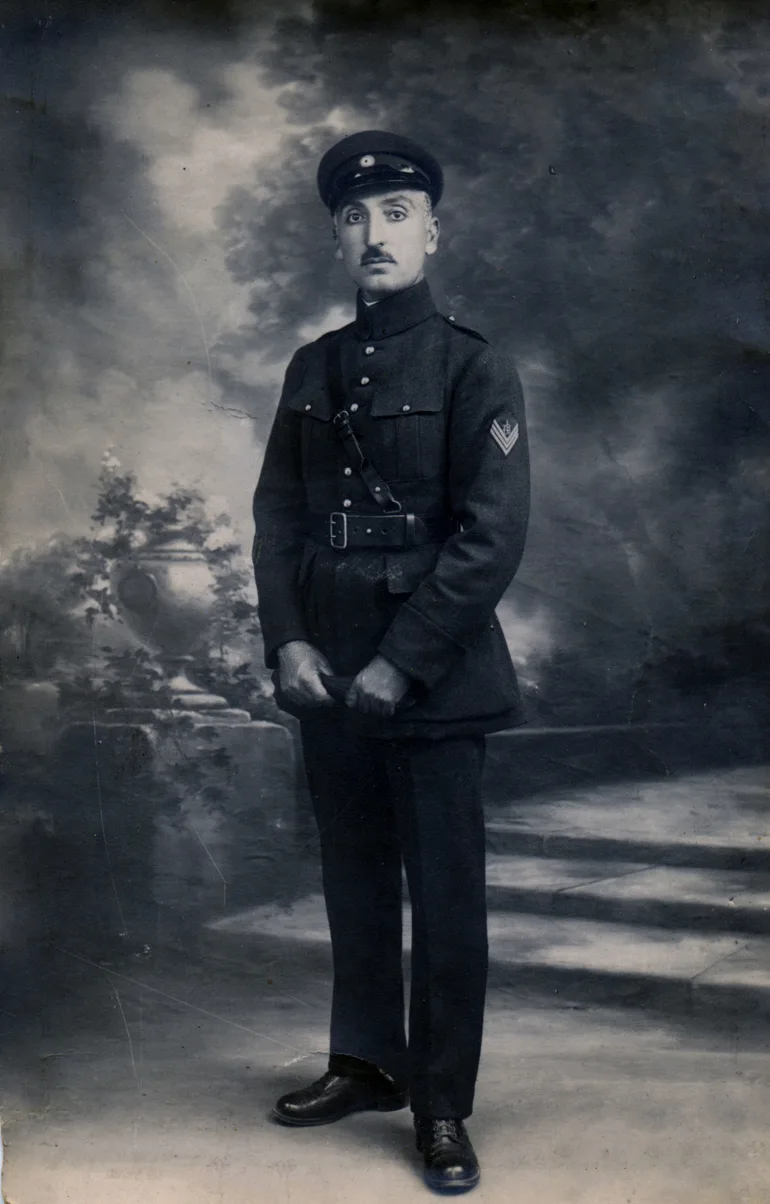
Valiko (Valerian) Jugheli (1887-1924) began as a Marxist, first with the Bolsheviks and then with the Mensheviks. After the revolution of 1917 he put together a Red Guard detachment that grew into the People's Guard of Georgia; on the twenty-ninth of November 1917 his men seized the Tiflis arsenal. The Guard was not simply an army but the armed arm of the social democratic party, and Jugheli commanded it throughout the republic.
In 1918 the Guard under his command fought Bolshevik forces in Abkhazia: that was a political, civil war, not a campaign against the Abkhaz. In South Ossetia in 1920 the Guard put down an uprising raised by local Bolsheviks with the backing of Soviet Russia, so the enemy there was political as well. But the methods fell upon the whole region: mass arrests, disarmament and collective punishment, burned villages, tens of thousands who left across the ridge. Jugheli described it himself, in detail, in his diary Heavy Cross, justifying the violence as the price of keeping Georgia independent.
After Sovietisation he went to France to study military affairs, and in 1924 he returned to prepare an anti-Soviet uprising. He was arrested quickly, and on the thirtieth of August 1924 the Cheka shot him; he was thirty-six. Heavy Cross remains one of the most uncomfortable and most important testimonies about that republic.